
 08045800677


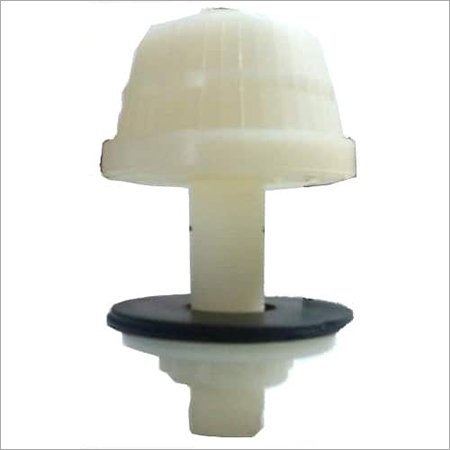
SP-15 NYLON GLASS FILLED
120.00 - 150.00 INR/Piece
Product Details:
- Density 1.42 Gram per cubic centimeter(g/cm3)
- Color Pattern Solid
- Heat Resistance Yes
- UV Resistant Limited
- Plastic Type Engineering Thermoplastic
- Leak Protection Yes
- Melting Point 220°C
- Click to View more
X
SP-15 NYLON GLASS FILLED Price And Quantity
- 120.00 - 150.00 INR/Piece
- 200 , , Piece
SP-15 NYLON GLASS FILLED Product Specifications
- 300 mm - 1000 mm
- 220°C
- Smooth, Semi-Matte
- Rockwell (R) 115-120
- Nylon Glass Filled Rod
- Natural (Off White/Grey) / Black
- 170 - 220 MPa
- Yes
- Extruded / Injection Moulded
- 1.42 Gram per cubic centimeter(g/cm3)
- Nylon (Polyamide), Glass Fiber Filled
- Solid
- Injection Molding
- Standard diameters 10 mm to 200 mm
- Varies with dimensions
- Yes
- Limited
- Engineering Thermoplastic
- Gears, Bearings, Bushes, Insulators, Structural Components
- Not inherently flame retardant
- Good
- -40°C to +120°C
- 0.35 - 0.40
- Excellent
- High
- Good to oils, fuels, and many chemicals
- >6000 MPa
- <1.5% (24 hrs at 23°C)
SP-15 NYLON GLASS FILLED Trade Information
- 500 , , Piece Per Day
- 10 Days
Product Description
SP-15 NYLON GLASS FILLED
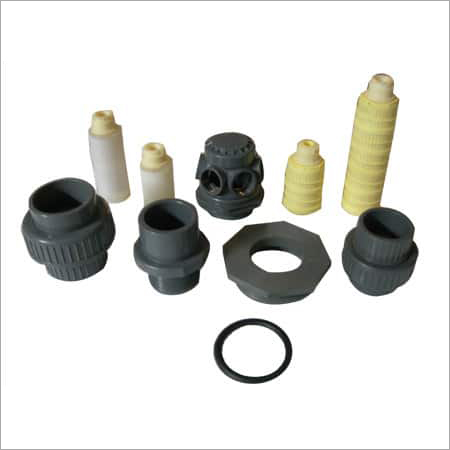
There is a SP-15 NYLON GLASS FILLED offered by us that is more brittle than standard nylon. It can cost approximately 50-100% more than unfilled counterparts. Nylon is highly versatile. Due to its many advantageous properties, it finds use in many industries and industrial applications, making it one of the most widely used engineering thermoplastics. Glass filled nylon is widely used for 3D printing, additive manufacturing and other applications that need to incorporate strength and stiffness. The offered SP-15 NYLON GLASS FILLED is very efficient and made for use in the various industries. They are easy to install.
Specification
| Country of Origin | Made in India |
| Size/Dimension | 1/2 inch,3/4 inch |
| Usage/Application | Water Treatment Spare Part |
| Product Type | Water Treatment Spare Part |
| Media | Water |
| Material | Plastic |
| Packaging Type | Varies |
Engineered for High Performance
SP-15 Nylon Glass Filled rods are meticulously engineered to provide outstanding balance between strength, machinability, and durability. Their glass fiber reinforcement enhances both impact resistance and structural rigidity, meeting the rigorous demands of industrial environments. With a continuous operating temperature of up to 120C and robust mechanical properties, these rods are well-suited for critical components such as gears, bushings, bearings, and insulators.
Reliable in Diverse Industrial Applications
Trusted across multiple industries, SP-15 rods serve as the material of choice for applications requiring high dimensional stability, low friction, and consistent insulation. Their resistance to oils, fuels, and many chemicals ensures longevity and stable performance in automotive, electrical, and mechanical applications. Thanks to their low moisture absorption and excellent processability, manufacturers can rely on SP-15 for quality and versatility.
FAQs of SP-15 NYLON GLASS FILLED:
Q: How is SP-15 Nylon Glass Filled rod typically processed or shaped?
A: SP-15 rods are primarily produced through extrusion or injection molding, providing versatile options for custom shapes and dimensions. They can be further machined with excellent results, making them ideal for precise industrial components.Q: What are the main benefits of choosing SP-15 Nylon Glass Filled rods for industrial applications?
A: Key advantages include high impact strength, exceptional flexural modulus (>6000 MPa), low water absorption (<1.5%), good chemical and electrical resistance, and superior machinability. These properties enhance performance and longevity in demanding environments.Q: When should SP-15 Nylon Glass Filled rods be used over standard nylon rods?
A: SP-15 should be selected when higher strength, rigidity, and wear resistance are required, such as in gears, bearings, and structural components that operate under mechanical stress or exposure to chemicals.Q: Where can SP-15 Nylon Glass Filled rods be applied most effectively?
A: These rods excel in applications like gears, bushings, bearings, insulators, and other structural parts within automotive, electrical, and mechanical systems, especially where high strength and dimensional stability are vital.Q: What is the typical range of sizes and available finishes for SP-15 rods?
A: SP-15 rods come in standard diameters from 10 mm to 200 mm and lengths between 300 mm and 1000 mm. They are typically available in solid off-white/grey or black colors with a smooth, semi-matte surface finish.Q: Are there any limitations regarding the flame resistance and UV stability of SP-15 Nylon Glass Filled rods?
A: SP-15 is not inherently flame retardant and offers limited UV resistance, so it is best used indoors or in environments where fire and prolonged sun exposure are not significant concerns.Q: What makes SP-15 Nylon Glass Filled particularly suitable for machined components?
A: Its excellent machinability, dimensional stability, high hardness (Rockwell R 115-120), and consistent structure allow for precise fabrication of custom parts with reliable long-term performance.Tell us about your requirement

Price:
Quantity
Select Unit
- 50
- 100
- 200
- 250
- 500
- 1000+
Additional detail
Mobile number
Email

Other Products in 'Plastic Components' category

Contact Details
GST : 33AAFCP7262H1ZD

- Plot No. B-3, Sipcot Phase-I, SIDCO Industrial Estate, Hosur, Krishnagiri - 635126, Tamil Nadu, India
- Phone :08045800677
- Send Inquiry
 Send Inquiry
- Mr Shankar Narayanan (Managing Director)
- Mobile :08045800677
 Send Inquiry
 Send SMS
|

 |
PRAKASH TECHNO PLAST INDIA PVT. LTD.
All Rights Reserved.(Terms of Use) Developed and Managed by Infocom Network Private Limited. |
